skip to main |
skip to sidebar
 One of my favourite British arrangers is Wally Stott. A musical genius and a complex character (he later moved to America and became Angela Morley, a valuable collaborator of John Williams), Stott/Morley deserves a blog entry all his/her own. Stott's work straddled jazz and light orchestral (and, later, film and TV soundtracks). ¶ He also did a lot of distinguished work supporting vocalists — I first became aware of his existence through a terrific, jazzy album recorded with, of all people, Diana Dors. ¶ When I learned that Stott had done an album with Mel Tormé, one of my favourite jazz singers, I just had to have it. Tormé was a bit of a grasshopper (or is it a gadfly?) where record labels were concerned and it seems when he was touring
  Britain in 1956 he decided he might as well record an album with the locals. ¶ I discovered its existence when it was reissued, with some additional tracks, on CD. Of course, if you know anything about me, you’ll know that a CD is no good for my purposes. I had to have the vinyl. ¶ And this is where I hit a brick wall. ¶ Not only could I not find a copy of the original LP, I couldn’t even find a picture of the cover. That was weird. ¶ It didn’t help that I initially thought the album was on Verve (because Stott and Tormé also did some work together on a later Verve release My Kind of Music). ¶ The only images that surfaced were the somewhat dull CD cover and — most recently — a delightful cover for the four track EP of tracks from the album (which was actually on the Philips label,
 where Stott was the musical director). Great cover (see the main picture, above). Dig the bowler hatted toff! Dig the cloth capped taxi driver! I hope you tipped him well, Mel. I hope you kicked the toff in the nuts. Watch out for that British bulldog. ¶ Here matters stood, until yesterday when I had the opportunity to buy a portion of an excellent collection of jazz and vocal LPs (thank you, Lawrence). Among the tantalising items I found was — no, not the Philips album, that would have been too much — but a reissue on vinyl released some 25 years later. ¶ From the obscure Apex label it was entitled The Great Song Stylists, which explained why it hadn’t turned up on my radar. It has some helpful liner notes by Stan Britt and, very usefully, adds two tracks to the original Philips release, the A and B sides of a single Tormé also recorded here in ’57. ¶ These tracks are also on the
  CD (which additionally includes six non-Stott recordings Mel did in the UK, with stalwarts like Roland Shaw and Ted Heath.) ¶ So the search for the original LP continues, but in the meantime I’ve got some vinyl to listen to. ¶ Parenthetically, one of my other favourite British arrangers (all right, he was actually Canadian), Robert Farnon, also did an obscure UK-only session with another great crooner. In fact, the greatest of them all: Frank Sinatra's Great Songs from Great Britain. But that’s another blog...
 This just in from the estimable Dusty Groove in Chicago (to my mind, the world's best record shop). It's a lovely mono copy, in nice shape, on heavy vinyl, a black label RCA issue with the electro-flash 'A' on the logo. ¶ I was initially a bit sniffy because it's not a deep groove pressing, but it plays beautifully. ¶ Mr Lucky was a 1950s TV show from Blake Edwards, who also created Peter Gunn. Like Peter Gunn, it featured music by the magnificent Henry Mancini and, like Peter Gunn, it was popular enough for two albums to be released. ¶ To be honest I didn't have high hopes for this album musically — I'm not a huge fan of the original Mr Lucky LP, which wasn't really in the same league as Peter Gunn, and I thought this sequel would be a light weight, south of the border novelty excursion cash-in. ¶ So I bought it as much for the terrific cover art as anything else. The illustration is by Don Peters who also did the classic art for the original Mr Lucky album. Retro crime jazz plus cats. Who could ask for more? ¶ But the album is much more than just a pretty cover. It turns out to be a real gem, one of the best from Mancini in this period, and it certainly seems superior to the original Mr Lucky. The cheesy cha-cha tracks that dominated the first album are balanced by some outstanding compositions here. ¶ Highlights emerging from early listening include the slinky, smoky, sexy
  Blue Mantilla which features some judicious use of Hammond organ, restrained and subtle strings and canny percussion; meanwhile, Lujon reminds me of Les Baxter's classic exotica pieces with great percussion and tasty guitar; and best of all is The Dancing Cat — and not just because of the title, but thanks to some amazing little electronic beeps (possibly coaxed out of the Hammond) which sound like an old fashioned telephone busy signal. They push the album towards the avant-garde. ¶ There isn't a huge amount of information in the liner notes but, as with most Mancini albums, certain outstanding musicians are name checked. Players on the album include Laurindo Almeida, Jimmy Rowles, Larry Bunker, Milt Holland and Shelly Manne. ¶ Wonderful stuff. If you get a chance to pick it up, particularly on vinyl, don't hesitate.
 My friend Ben Aaronovitch's novel, Rivers of London, features a hero whose father is a jazz musician. I'm the jazz advisor for the books, so there's a scene in Rivers where Peter Grant recalls an historic gig his father almost played, featuring Johnny Keating and Lita Roza at the Prospect of Whitby. ¶ The Prospect is a history-drenched pub overlooking the Thames in London's East End. Lita Roza was a talented and stunningly beautiful singer of the 1950s. Johnny Keating is one of the noteworthy jazz composer-arrangers I got into through his movie soundtracks (the scores for Robbery and, especially, Hotel). ¶ Both Lita and Johnny worked with the great British band leader Ted Heath in the early 1950s, but the Prospect of Whitby gig which reunited them took place considerably later, on 4 May 1960. ¶ It was a classic performance featuring versions of Don't Get Around Much Any More and Lush Life which would have made Duke Ellington proud. (Ellington seemed to disdain vocalists and seldom worked with one of Lita Roza's caliber). ¶ There is also a scorching version of Cole Porte
 r's Love for Sale. The trumpet work, by Ronnie Hughes, is outstanding throughout (and sometimes very Ellingtonian) and Johnny Keating on trombone also distinguishes himself. There's also a very nice reading of I Love You Porgy which features some cheerful contributions from a cash register in the background, like the typewriter in a Leroy Anderson composition. Ah, the joys of live recording in a working venue. ¶ The original Pye LP of the session is now a collector's item. So is the Japanese vinyl reissue I just enjoyed listening to on this rainy afternoon. ¶ The record is a small classic and worth seeking out. It is also the source of one of the most cryptic puns in the history of music. Back in Britain in the 1950s there was a celebrated ad campaign to encourage the populace to drink more milk.The slogan was Drinka Pinta Milka Day. So, when the Prospect of Witby recordings were released, under the singer's name, some wag
 came up with the idea of entitling the album Drinka Lita Roza Day (yes, they'd gone metric).¶ Unsurprisingly, this title drove the translators for the Japanese reissue berserk. Apparently they couldn't work out what the hell it meant, and tried to tame it into some kind of coherence. Which is presumably why the Japanese release was (perhaps inadvertently) retitled Drinka Lita Roza Days (plural). ¶ If you're intrigued by the recording, which is an outstanding jazz vocal session, you can acquire it cheaply on this double CD. Be warned, though, that it is surrounded by other material, much of which is not jazz, and some of which is dodgy pop. (For a more jazzy side of Lita, check out the compilation of her work with Ted Heath on this CD). ¶ Lita Roza was no stranger to dodgy pop. She hated it and resisted it, but those were the days when the artist didn't have much choice in the material they recorded. Which is why she was forced to record a UK cover version of (How Much is That) Doggie in the Window, a strong contender for the worst popular song of all time, and one which Lita reportedly roundly despised. ¶ This ditty was first
 popularised by Patti Page who was saddled with it on the other side of the Atlantic. (Like Lita Rosa, Page was a singer with jazz chops who hated the canine ballad; she would have been better employed making some more of her excellent recordings with Peter Rugolo.) ¶ We have now lost Lita Roza, but Johnny Keating is still with us and is a national treasure. Someone should book him at Ronnie Scott's or the Royal Festival Hall.
 Boyd Raeburn first came to my attention thanks to a vintage 1950s Savoy album called Boyd Meets Stravinsky. It attracted me right away because it featured arrangements by Johnny Mandel, because it invoked the name of the Immortal Igor and, let's face it, because it was on red vinyl. ¶ Boyd Raeburn's outfit was one of the notable big bands of the 1940s which was saddled with the description 'progressive' or 'modernist'. ¶ The other culprits included Stan Kenton, Claude Thornhill and, perhaps surprisingly, Woody Herman. In a way, Raeburn was the missing link between Kenton and Woody Herman. ¶ At the same time he shared a penchant for unusual musical ideas with Claude Thornhill, the sort of ideas which would ultimately result in, among other things, Miles Davis' The Birth of the Cool. ¶ Of the names here, Raeburn's is the most obscure, which is a situation I'd like to repair, prompted by the arrival of a terrific album called Boyd Raeburn and His Orchestra 1944-46. ¶ This odd item,
  which I got from good old Dusty Groove in Chicago, seems to be some kind of a high end bootleg. The label, if you can call it that, is Big Band Landmarks of which this is volume 9 (I'd love to know what the other 8 are). ¶ The cover says Not For Sale and Not Licensed for Commercial Use, which begs the question just what the hell record is intended for. Actually, I guess it's intended for someone like me. The cover also specifies that it's in beautiful mono and the sound quality is indeed great. ¶ Boyd Raeburn is a major figure in jazz, although little known. The book Big Band Jazz by Albert McCarthy runs to 350 pages of dense text and devotes all of five words to him: "The advanced Boyd Raeburn Band," it says. This is absurd. The collective of outstanding arrangers who worked for Raeburn is probably second only to that of Stan Kenton. ¶ Boyd Raeburn began by leading a series of uninspired bands for about ten years. Manny Albam, later to become an exceptional composer and arranger in his own right, briefly played baritone sax for Raeburn and he reports that the early outfit "was so bad it made Freddie Martin's band sound good." A withering comment — if anyone could remember who poor Freddie Martin was. ¶ But by 1944 Raeburn was hitting his stride, helped con
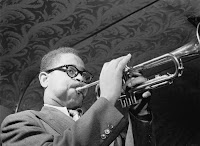 siderably by having a magnificent arranger called Johnny Mandel playing in his trombone section. ¶ Other important musicians who played with Raeburn included pioneering bebop trumpeters Dizzy Gillespie and Bennie Harris, reed men Hal McCusick and Jimmy Giuffre, Buddy De Franco on clarinet, high note trumpet specialist Maynard Ferguson, drummer Shelly Manne and Serge Chaloff, who succeeded Albam on baritone sax. Chaloff would migrate to the Woody Herman band in 1947, taking with him the contagious memes of both bebop and heroin addiction. ¶ Raeburn's singers included David Allyn (aka David Allen) and Ginny Powell. Allen/Allyn is one of the few big band vocalists who is still with us. He's a singer to be reckoned with and would later record some milestone jazz vocal albums under the direction of Johnny Mandel and Bill Holman. At the time of his
  residency with Raeburn, David Allyn was already showing serious talent. Perhaps Picnic in the Wintertime and It Can't Be Wrong tend to that sort of throbbing emotive Billy Eckstine-Johnny Hartman style which to my ears is all too easily parodied (the Bonzo Dog Doodah Band nailed it hilariously). But Black Night and Fog and Please Let Me Forget are splendid home runs. ¶ His band mate Ginny Powell was also dynamite, fresh and exhilarating. Not just another big band canary, she was praised by Ella Fitzgerald and Ginny's version of Memphis In June is a peach. Also be sure to hear her Rip Van Winkle. ¶ But even more significant than Raeburn's singers or players were his arrangers. Despite the band's lack of commercial success, their distinctive and groundbreaking writing was recognised. David Allyn recalls that top arrangers-to-be like Henry Mancini, Nelson Riddle and Peter Rugolo came to hear gigs and "brought their notebooks along." ¶ In addition to Johnny Mandel, Boyd's arrangers initially included Raeburn himself, Ed Finckle and George Handy. ¶ Finckle provided classics like Boyd Meets Stravinsky but it was George Handy who became the band's first star arranger with his writing on Yerxa ('the elegy movement from the Jitterbug Suite" — a vehicle for McCusick), the nicely titled Tonsillectomy
 and Dalvatore Sally, and the aforementioned Rip Van Winkle and Memphis in June, where he provided beautiful swinging vocal features for Ginny Powell. ¶ Handy came to demand star billing of the kind that fellow arranger Eddie Sauter was getting with Ray McKinley. This and other factors (I notice he is frequently referred to in articles as 'eccentric') led to George Handy leaving Raeburn. ¶ But it's hard to do too much mourning over this because his replacement was the mighty Johnny Richards, one of my heroes and a man who would go on to greatness with his writing for Stan Kenton (check out Cuban Fire and West Side Story). Highlights of Richards spell with Raeburn include Sheherazade/Concerto for Clarinet for Buddy De Franco. ¶ Raeburn's knack for hiring superb arrangers didn't stop there, though. It's basically a roll of honour. He would go on to enlist Ralph Burns, whose talents are widely recognised, and neglected heroes like Paul Villepigue and Thomas Talbert. Talbert is another household god of mine — watch this space for an in-depth piece about him. Villepigue I've only just learned about (thank you, Ian) but Gunther Schuller writes of his "first rate modern arrangements" and that's good enough for me.¶ If you'd like to acquaint yourself with the Boyd Raeburn bands, perhaps the best single compilation is the oddly spelled Jewells from Savoy. Originally a sumptuous two LP set, then a CD. Both are now out of print but you can download from iTunes here. ¶ However, I found that the best representation of Raeburn on vinyl was from the small British independent label Hep. The same seems to be true on CD and Hep have an excellent selection of reasonably priced issues here. ¶ And what of Boyd Raeburn himself? He gave up music in 1957, bowing out on an album called Fraternity Rush for Columbia, which featured a nice cartoon cover by Arnold Roth. ¶ Raeburn married Ginny Powell and retired to the Bahamas. Not a bad way of riding off into the sunset.
 Lalo Schifrin is my first musical hero. I came to know his name, the way millions of others did, through the credits on Mission Impossible. ¶ I sought out his records and the first one I discovered was Mannix, another 1960s television score and a classic. Virtually all the other music I was listening to in that period of my life (including 'Pixie and Dixie and Mr Jinx the Cat', a 45rpm single on orange vinyl) has fallen by the wayside but Mannix still rewards listening decades later. Hip surging big band crime jazz, it deserves a post of its own. ¶ Suffice to say here that it was the beginning of a fine collection of Lalo Schifrin albums which would go on to include the surging heartfelt Cuban rhythms of Che, the sweet psychedlic jazz of There's a Whole Lalo Schifrin Goin' On and the magnificent Bach-goes-to-Brazil bebop of Marquis de Sade (another post for that beauty). ¶ As a kid growing up in Canada, these were a major part
  of the background music to my life. ¶ When we moved to England I discovered Schifrin's soundtracks for Bullitt (a west coast cool masterpiece of thriller jazz) and Cool Hand Luke (plangent bluegrass and the classic song Down Here on the Ground) along with his recordings with Dizzy Gillespie (allow me to recommend New Wave on Phillips, a laid back bossa nova groover produced by Quincy Jones. Jose Paula on guitar is great). ¶ Thanks to Magpie Records, a little soundtrack shop in Worcestershire, I'd even managed to track down rarities like Murderers' Row (a stereo copy but a bit scratchy). ¶ By the time I went to university my holy grail of Schifrin albums was Gilles
 piana, his most famous collaboration with Dizzy, and his most hard to find. I moved into a student hall of residence in Russell Square and discovered that just around the corner was Mole Jazz, the finest jazz record shop in Britain. ¶ I went there frequently. I picked up records by everybody from Oscar Peterson to James 'Blood' Ulmer. But I always made a particular point of looking see if there was any Schifrin and — especially — hoping for the grail, the cynosure, the mother lode — Gillespiana. ¶ It never turned up. What did turn up, on my first visit there, was a lovely album by Stan Getz. It was called Reflections and it featured arrangements by Lalo Schifrin including a lyrical version of Spring Can Really Hang You Up the Most. ¶ The only thing that spoiled it was that three of the arrangements (Moonlight in Vermont, If Ever I
  Would Leave You and an ill advised cover of Dylan's Blowing in the Wind) were not by Schifrin at all but by a fellow called Claus Ogerman. ¶ Now, the odd thing is that soon after I got the record I met the guy who lived in the next room in my hall of residence. He was an affable ginger haired engineering geek with a large record library of his own. And it transpired he was a fanatical devotee of Claus Ogerman. ¶ I thought, who is this joker with his obsession for this oddly named foreign jazz-cum-pop musician? And presumably he thought the same about me. ¶ I don't recall him ever coveting my Stan Getz album, though. Perhaps he already had it. But over the years it's occurred to me that thanks to the presence of that LP
,
the wall between our rooms could be said to be the interface between two universes of obsessive record collecting. (In fairness to Ogerman, that version of  Blowin' In the Wind was quite catchy.) ¶ Anyway, to cut a long story short, one day I wandered into Mole Jazz and there it was. Gillespiana. I bought it and took it back to my student room. ¶ If that account seems a little flat and anti climactic, then that's all to the good. ¶ There was nothing wrong with the record. It was a British mono copy on Verve/HMV, in immaculate condition. After playing it once I filed it away. The excitement was over. Move along folks, nothing to see now. ¶ It had become such a big deal, tracking that record down, that the mere act of acquiring it had nullified my interest in it. ¶ This was my first encounter with the way that the collecting mentality can interfere with the aesthetic experiece. ¶ Gillespiana had just been swallowed up in my shelf full of Schifrin records (about fifty of them by that time). So that's what I mean when I say beware of finding what you're looking for. ¶ But the story has a happy end
 ing. Dusty Groove recently provided a sweet copy of the original US Verve pressing of Gillespiana and when I unpacked it last week and played it, I was rapt. I'm listening to it properly now. Finally, years later, the record is yielding its delights. 
 I was delighted when a copy of Robert Farnon's Shalako turned up at Dusty Groove. Farnon, a Canadian by birth, was essentially a British easy listening and light orchestral arranger. ¶ He was an acknowledged master of his craft and worked with singers of the stature of Sinatra, Tony Bennett and Sarah Vaughan. He also had considerable jazz chops, collaborating with the likes of JJ Johnson and George Shearing. (I wrote an earlier post about Farnon, on 18 August 2009.) ¶ He also did some soundtrack work, one of the most interesting examples of which is this 1968 western, adapted from a Louis L'Amour novel, starring the improbable but potentially mind blowing combination of Sean Connery and Brigitte Bardot. ¶ Needless to say, the movie was a disappointing snooze — sort of a bloated Hollywood attempt to emulate the spaghetti westerns, if memory serves. And Brigitte's nude scene was disappointingly tame and truncated, too... Where was I? ¶ Oh yes, the movie wasn't much cop, but Robert Farnon's music is of considerable stature. It's said that he had an open invitation to move to Hollywood and become a full time film composer. He reportedly loved England too much to leave, though. ¶ The album
  begins with a bruisingly obvious main title theme featuring a whitebread chorus singing "Shalako, Shalako, flashing eyes, no disguise!" I found myself wondering why anyone ever bothers with this kind of straight-ahead mundane meat-and-potatoes movie ditty based on the character of the title. Has such a thing ever worked? Surely no song like this had ever ended up as a hit? ¶ And then I thought of Laura, by David Raksin and Johnny Mercer. A great movie served euphorically well by one of the most meltingly beautiful (and sophisticated) jazz ballads ever written. Okay, okay, so main title movie songs can work. But brother, believe me, this one is no Laura. ¶ There's some very nice harmonica, though, played by Tommy Reilly — another Canadian. In fact the score is well served throughout by Farnon's clever use of the instrument. Of course, the harmonica isn't a startlingly novel choice for a western, but it is brilliantly deployed here. ¶ Side two. Farnon does a highly effective job of evoking landscapes. I'm see mountain vistas in the music. It reminds me of Copland. Then, oh Jesus, that song is back. Is it starting to become catchy? Nope. The use of strings in the bridge is just wonderful, though. ¶ Not surprising, as Farnon was a legend for his string arrangements. Andre Previn called him "the grea
 test writer for strings in the world". And he was a big influence on other arrangers. Apparently Quincy Jones was in awe of him. (Feel free to correct me if I'm wrong about this, Q.) The harmonica on Irena (a theme for the Bardot character) is just beautiful. It's rhapsodic without ever being schmaltzy. ¶ But that song just never quits. It even crops up on the last track, Finale.
 I used to have a copy of this record years ago. It got lost in the shuffle of house moves, divorces and the general wear and tear of life. To tell the truth I didn't miss it that much. I always looked down my nose at it because, you see, it wasn't really a Jerry Goldsmith soundtrack. ¶ Instead it was a re-recording of a Jerry Goldsmith soundtrack by a jazzy band led by some guy called Si Zentner. ¶ I always loved Goldsmith, but I was a purist and since the music here had been filtered through someone else's sensibility, and presumably given some kind of commercial mainstream makeover, I disdained it. ¶ But recently Si Zentner cropped up again, in the context of a formidable big band leader. Thanks to the Unknown Jazz Collector (see 19 September 2009), I ended up with a copy of a sizzling album called Big Band Hits on the Sunset label, which I recommend most highly. ¶ And then there's the fact that the fragrant Claire Teale is in the habit of pl
 aying Zentner tracks on her show on Radio 2. So naturally I began to miss my long lost LP of Warning Shot, and when another copy turned up at Dusty Groove in Chicago, I jumped at the chance to replace it. I've now had time to get reacquainted with the album and I'm chagrined that I didn't appreciate its qualities before. ¶ Side one consists of themes from the film Warning Shot, a forgotten detective movie of the 1960s. It begins with the dense and complex title track, an energetic big band tear-down that reminds me of Lalo Schifrin's score for Mannix (a forgotten detective TV series of the 1960s) — which is a very good thing to be reminded of. Next up, The Gasser begins at a swiftly striding pace before changing tempo and morphing into a slow bluesy amble. It features sardonic and fatly flatulent interjections on brass and guitar throughout which might have given
 rise to the title. ¶ Track 3, the groovy and exciting Messed Up deploys electric guitar, brass stabs, bongos and Hammond organ in a manner which again conjures up Lalo Schifrin. Perhaps not surprisingly since both Goldsmith and Schifrin both worked on the Man From Uncle. ¶ Track 4, Back to the Seascape, concludes in a way that brings to mind Johnny Mandel's score for The Sandpiper, a movie full of seascapes. This is followed by Miss Alice, which displays a bittersweet Jazz Bach lilt before resolving in a welter of truly beautiful brass. It has tremendous melancholy beauty and once again (the brass) suggests Jo
 hnny Mandel. Wow. Side one concludes with Cornering the Suspect which takes us back into Mannix territory. ¶ Side two is an assortment of themes from other Goldsmith film scores, plus one more straggler from Warning Shot, a cover version of Nat King Cole's 'Mona Lisa' which seems to waver between Kurt Weill and the Mariachi Brass in terms of its interpretation. ¶ Von Ryan's March (from Von Ryan's Express, a war movie scored by Goldsmith in 1965) is one of the highlights here. It begins in martial fashion, then takes an unexpected turn into the territory of Benny Golson's Killer Joe. ¶ A Patch of Blue is another standout, wistful and quite lovely. Once again it's slightly reminiscent of Johnny Mandel (see The Sailor Who Fell from Grace with the Sea). But its poignant, poised precision is pure Goldsmith. Incidentally, A Patch of Blue will be the focus of a future piece by me on Jerry Goldsmith and Jazz. ¶ The theme from The Prize is a smooth and smoochy slow number which appears to have Moon River in its sights. Then, just to remind us of Goldsmith's crime jazz and spy movie credentials, side two closes with his theme from The Man
 from Uncle, which begins with a brass fanfare that seems to promise go-go dancers in shimmering mini skirts before developing into a stripped down skirmish between sax and bongos. ¶ Side one of Warning Shot is arranged by Bob Florence, side two by the pseudonymous sounding Donal D. Dimick about whom I have been able to learn nothing. Other Zentner arrangers over the years have included Billy May, Pete Carpenter, Bob Chase and the great Bill Holman, but I haven't found anyone who is an anagram of Donal D. Dimick or even Donald Dimick. ¶ I'd also like to credit the splendid Saul Bass style cover design of the album. The art direction on the LP is by Woody Woodward, who took over from William Claxton as designer for the Pacific Jazz label in the late 1950s. The logo with the gun and the hand emerging from the W was part of the movie campaign, but everything else here looks like its Woody's handi
 work, further strengthening the album's claim as a desirable jazz item. ¶ In any case, Warning Shot, previously dismissed by me, turns out to be a crucial document in Jerry Goldsmith's early work. And it's one of the few convincing examples of jazz in the Goldsmith canon. It inspired me to take down my previous Si Zentner discovery Big Band Hits, for further listening. Which in turn inspired me to go back to Warning Shot. ¶ The two albums have been feeding off each other, so to speak. Now just one question remains, do I file this gem under Goldsmith or Zentner? Ah, the joys of a record collection...
 I've been wanting to write something about Kenyon Hopkins since I started blogging about music. What prompted me to finally get down to it was finding an album called Music of Mystery Mayhem and Murder in a shop in Sheen this week. ¶ The title is misleading; the album looks like just one more 007 cash-in from the James Bond craze of the sixties. Indeed the words James Bond are huge in comparison to the album's title. It was on the British budget Music For Pleasure (MFP) label and I almost passed it by because it looked so spectacularly tacky, and because the world isn't short of dodgy albums of James Bond cover versions. ¶ But something caugh
 t my eye. One of the tracks on the LP was Red Eyed Rats. There can't be too many pieces of music with that title, I thought. So I looked more closely and, sure enough, it was the Kenyon Hopkins composition from his amazing album Nightmare. And there were three more Hopkins tracks on the album. ¶ Evidently some bright spark had decided to eke out a fairly conventional James Bond cash-in with these amazing lost audio documents. Or maybe somebody simply saw a way of giving a new life to some terrific music, by recycling it with a few 007 tracks attached. ¶ I got the record home and it was a delight. The James Bond versions by Danny Davis were pretty interesting in themselves. And there were also some nice Mancini Peter Gunn covers by Ray Ellis, but it was the K
 enyon Hopkins stuff that was pure gold. It was great to hear it again, and it encouraged me to pull out Nightmare, the original source of this material. And from there I began digging out all his albums and soon had a full blown Hopkins retrospective going on. ¶ So I'm grateful to this little gem (the sound quality of the MFP pressing is quite nice too, by the way). However, as the album's cover is pure kitsch I'll put it near the end of this piece, so it won't scare the horses, so to speak. Instead I'll put a Pete Turner photo at the top, since it will more accurately suggest the classiness and cool artistry of Kenyon Hopkins. (Buy Turner's book, The Color of Jazz, here. And you really should buy it. Once you get past the somewhat shocking cover, it's a book full of colour. And jazz.) ¶ This picture was used on the cover of the album The Sound of New York, produced by Creed Taylor. Taylor was a long time collaborator, and indeed some Hopkins albums appeared under the Creed Taylor name, because Hopkins was under exclusive contract to Capitol at the time. ¶ These pseudonymous classics include Lonelyville (another Pete Turner cover) which is attributed
 to the Creed Taylor Orchestra. Presenting a landscape of hip urban alienation and a nice cover with a cat (get the mono version, there's more cat on it), it features Dick Hyman on piano and includes, among other joys, a stonking version of St James Infirmary. The back cover of Lonelyville boasts "arrangements by Bob Kenyon", but of course it's pure Kenyon Hopkins. ¶ As are Shock and Panic, two other 'Creed Taylor Orchestra' excursions of the 1950s which are now scarce and sought after collectors items. Luckily the resourceful UK Righteous label is poised to reissue them on CD. ¶ Panic and Shock occupy the same oddball terrain as Nightmare, a 1962 MGM albu
 m finally under Hopkins' own name. These are spooky soundscapes incorporating sound effects as well as music, and were originally marketed around Halloween to teenagers in search of cheap thrills (in other words, all teenagers). ¶ Now, I know this makes them sound like camp curiosities whose only value today would be as kitsch diversions. But nothing could be less accurate. They're actually extraordinarily effective, highly musical, and possessed of their own peculiar integrity. Plus, they're fun. It's a bit like Les Baxter meets Alfred Hitchcock — uneasy listening, to coin a phrase. But I think there's considerably more depth and seriousness to Kenyon Hopkins. And also a thread of bluesy authenticity which constantly validates his work. ¶ Even a track as mad as Werewolf (on Nightmare), which depicts a lone cowboy huddled by his camptfire, apprehensively twanging his guitar, singing and whistling into the night, while being stalked by a rustling, and ultimately pouncing, lycanthrope. As nutty as it sounds, and I haven't even told you that the cowboy is singing Home On the Range, Werewolf exhibits some real authenticity and modest
  power. Maybe because it never comes across as phony, or silly, or throwaway. ¶ This is partly because these albums are done with real conviction and a real R&B rawness. It also doesn't hurt that the musicians playing on the sessions are of the calibre of Jerome Richardson and Phil Woods. ¶ By rights these records should just be bad jokes, forgettable and cheap. but instead there's something quite marvelous about them. They occupy a region somewhere between jazz and exotica. There's also an intriguing overlap with film music. In particular, the wild Red Eyed Rats features orgasmic female breathing and vocalese ("Why is she is responding to the rats like that?" wondered a generation of puzzled teens) in a way that very much anticipates the work o
 f Edda Dell'Orso for Ennio Morricone. There is also a very groovy jazzy coda after the rats devour their victim. ¶ There's an excellent interview with Creed Taylor on Marc Myer's formidable JazzWax blog, where he discusses these recordings, and working with Kenyon Hopkins. ¶ I had intended to make this piece an overview of all of Hopkins' work but it's clear to me now that I've only begun to scratch the surface. I can't do justice to the range, or depth, of his music in one short (or indeed interminable) essay. ¶ So expect another piece discussing his jazz and soundtracks here soon. Just let me close by thanking the people who put me on to Kenyon Hopkins in the first place. ¶ Dusty Groove, in Chicago, are so much more than just a record store. They offer insightful
  capsule reviews of the albums they stock and it was their description of East Side, West Side that initially put me on the scent, and then Doug Payne's invaluable discography gave me the information I needed to begin the search in earnest. Thanks, guys.


