skip to main |
skip to sidebar
 I used to have a copy of this record years ago. It got lost in the shuffle of house moves, divorces and the general wear and tear of life. To tell the truth I didn't miss it that much. I always looked down my nose at it because, you see, it wasn't really a Jerry Goldsmith soundtrack. ¶ Instead it was a re-recording of a Jerry Goldsmith soundtrack by a jazzy band led by some guy called Si Zentner. ¶ I always loved Goldsmith, but I was a purist and since the music here had been filtered through someone else's sensibility, and presumably given some kind of commercial mainstream makeover, I disdained it. ¶ But recently Si Zentner cropped up again, in the context of a formidable big band leader. Thanks to the Unknown Jazz Collector (see 19 September 2009), I ended up with a copy of a sizzling album called Big Band Hits on the Sunset label, which I recommend most highly. ¶ And then there's the fact that the fragrant Claire Teale is in the habit of pl
 aying Zentner tracks on her show on Radio 2. So naturally I began to miss my long lost LP of Warning Shot, and when another copy turned up at Dusty Groove in Chicago, I jumped at the chance to replace it. I've now had time to get reacquainted with the album and I'm chagrined that I didn't appreciate its qualities before. ¶ Side one consists of themes from the film Warning Shot, a forgotten detective movie of the 1960s. It begins with the dense and complex title track, an energetic big band tear-down that reminds me of Lalo Schifrin's score for Mannix (a forgotten detective TV series of the 1960s) — which is a very good thing to be reminded of. Next up, The Gasser begins at a swiftly striding pace before changing tempo and morphing into a slow bluesy amble. It features sardonic and fatly flatulent interjections on brass and guitar throughout which might have given
 rise to the title. ¶ Track 3, the groovy and exciting Messed Up deploys electric guitar, brass stabs, bongos and Hammond organ in a manner which again conjures up Lalo Schifrin. Perhaps not surprisingly since both Goldsmith and Schifrin both worked on the Man From Uncle. ¶ Track 4, Back to the Seascape, concludes in a way that brings to mind Johnny Mandel's score for The Sandpiper, a movie full of seascapes. This is followed by Miss Alice, which displays a bittersweet Jazz Bach lilt before resolving in a welter of truly beautiful brass. It has tremendous melancholy beauty and once again (the brass) suggests Jo
 hnny Mandel. Wow. Side one concludes with Cornering the Suspect which takes us back into Mannix territory. ¶ Side two is an assortment of themes from other Goldsmith film scores, plus one more straggler from Warning Shot, a cover version of Nat King Cole's 'Mona Lisa' which seems to waver between Kurt Weill and the Mariachi Brass in terms of its interpretation. ¶ Von Ryan's March (from Von Ryan's Express, a war movie scored by Goldsmith in 1965) is one of the highlights here. It begins in martial fashion, then takes an unexpected turn into the territory of Benny Golson's Killer Joe. ¶ A Patch of Blue is another standout, wistful and quite lovely. Once again it's slightly reminiscent of Johnny Mandel (see The Sailor Who Fell from Grace with the Sea). But its poignant, poised precision is pure Goldsmith. Incidentally, A Patch of Blue will be the focus of a future piece by me on Jerry Goldsmith and Jazz. ¶ The theme from The Prize is a smooth and smoochy slow number which appears to have Moon River in its sights. Then, just to remind us of Goldsmith's crime jazz and spy movie credentials, side two closes with his theme from The Man
 from Uncle, which begins with a brass fanfare that seems to promise go-go dancers in shimmering mini skirts before developing into a stripped down skirmish between sax and bongos. ¶ Side one of Warning Shot is arranged by Bob Florence, side two by the pseudonymous sounding Donal D. Dimick about whom I have been able to learn nothing. Other Zentner arrangers over the years have included Billy May, Pete Carpenter, Bob Chase and the great Bill Holman, but I haven't found anyone who is an anagram of Donal D. Dimick or even Donald Dimick. ¶ I'd also like to credit the splendid Saul Bass style cover design of the album. The art direction on the LP is by Woody Woodward, who took over from William Claxton as designer for the Pacific Jazz label in the late 1950s. The logo with the gun and the hand emerging from the W was part of the movie campaign, but everything else here looks like its Woody's handi
 work, further strengthening the album's claim as a desirable jazz item. ¶ In any case, Warning Shot, previously dismissed by me, turns out to be a crucial document in Jerry Goldsmith's early work. And it's one of the few convincing examples of jazz in the Goldsmith canon. It inspired me to take down my previous Si Zentner discovery Big Band Hits, for further listening. Which in turn inspired me to go back to Warning Shot. ¶ The two albums have been feeding off each other, so to speak. Now just one question remains, do I file this gem under Goldsmith or Zentner? Ah, the joys of a record collection...
 I've been wanting to write something about Kenyon Hopkins since I started blogging about music. What prompted me to finally get down to it was finding an album called Music of Mystery Mayhem and Murder in a shop in Sheen this week. ¶ The title is misleading; the album looks like just one more 007 cash-in from the James Bond craze of the sixties. Indeed the words James Bond are huge in comparison to the album's title. It was on the British budget Music For Pleasure (MFP) label and I almost passed it by because it looked so spectacularly tacky, and because the world isn't short of dodgy albums of James Bond cover versions. ¶ But something caugh
 t my eye. One of the tracks on the LP was Red Eyed Rats. There can't be too many pieces of music with that title, I thought. So I looked more closely and, sure enough, it was the Kenyon Hopkins composition from his amazing album Nightmare. And there were three more Hopkins tracks on the album. ¶ Evidently some bright spark had decided to eke out a fairly conventional James Bond cash-in with these amazing lost audio documents. Or maybe somebody simply saw a way of giving a new life to some terrific music, by recycling it with a few 007 tracks attached. ¶ I got the record home and it was a delight. The James Bond versions by Danny Davis were pretty interesting in themselves. And there were also some nice Mancini Peter Gunn covers by Ray Ellis, but it was the K
 enyon Hopkins stuff that was pure gold. It was great to hear it again, and it encouraged me to pull out Nightmare, the original source of this material. And from there I began digging out all his albums and soon had a full blown Hopkins retrospective going on. ¶ So I'm grateful to this little gem (the sound quality of the MFP pressing is quite nice too, by the way). However, as the album's cover is pure kitsch I'll put it near the end of this piece, so it won't scare the horses, so to speak. Instead I'll put a Pete Turner photo at the top, since it will more accurately suggest the classiness and cool artistry of Kenyon Hopkins. (Buy Turner's book, The Color of Jazz, here. And you really should buy it. Once you get past the somewhat shocking cover, it's a book full of colour. And jazz.) ¶ This picture was used on the cover of the album The Sound of New York, produced by Creed Taylor. Taylor was a long time collaborator, and indeed some Hopkins albums appeared under the Creed Taylor name, because Hopkins was under exclusive contract to Capitol at the time. ¶ These pseudonymous classics include Lonelyville (another Pete Turner cover) which is attributed
 to the Creed Taylor Orchestra. Presenting a landscape of hip urban alienation and a nice cover with a cat (get the mono version, there's more cat on it), it features Dick Hyman on piano and includes, among other joys, a stonking version of St James Infirmary. The back cover of Lonelyville boasts "arrangements by Bob Kenyon", but of course it's pure Kenyon Hopkins. ¶ As are Shock and Panic, two other 'Creed Taylor Orchestra' excursions of the 1950s which are now scarce and sought after collectors items. Luckily the resourceful UK Righteous label is poised to reissue them on CD. ¶ Panic and Shock occupy the same oddball terrain as Nightmare, a 1962 MGM albu
 m finally under Hopkins' own name. These are spooky soundscapes incorporating sound effects as well as music, and were originally marketed around Halloween to teenagers in search of cheap thrills (in other words, all teenagers). ¶ Now, I know this makes them sound like camp curiosities whose only value today would be as kitsch diversions. But nothing could be less accurate. They're actually extraordinarily effective, highly musical, and possessed of their own peculiar integrity. Plus, they're fun. It's a bit like Les Baxter meets Alfred Hitchcock — uneasy listening, to coin a phrase. But I think there's considerably more depth and seriousness to Kenyon Hopkins. And also a thread of bluesy authenticity which constantly validates his work. ¶ Even a track as mad as Werewolf (on Nightmare), which depicts a lone cowboy huddled by his camptfire, apprehensively twanging his guitar, singing and whistling into the night, while being stalked by a rustling, and ultimately pouncing, lycanthrope. As nutty as it sounds, and I haven't even told you that the cowboy is singing Home On the Range, Werewolf exhibits some real authenticity and modest
  power. Maybe because it never comes across as phony, or silly, or throwaway. ¶ This is partly because these albums are done with real conviction and a real R&B rawness. It also doesn't hurt that the musicians playing on the sessions are of the calibre of Jerome Richardson and Phil Woods. ¶ By rights these records should just be bad jokes, forgettable and cheap. but instead there's something quite marvelous about them. They occupy a region somewhere between jazz and exotica. There's also an intriguing overlap with film music. In particular, the wild Red Eyed Rats features orgasmic female breathing and vocalese ("Why is she is responding to the rats like that?" wondered a generation of puzzled teens) in a way that very much anticipates the work o
 f Edda Dell'Orso for Ennio Morricone. There is also a very groovy jazzy coda after the rats devour their victim. ¶ There's an excellent interview with Creed Taylor on Marc Myer's formidable JazzWax blog, where he discusses these recordings, and working with Kenyon Hopkins. ¶ I had intended to make this piece an overview of all of Hopkins' work but it's clear to me now that I've only begun to scratch the surface. I can't do justice to the range, or depth, of his music in one short (or indeed interminable) essay. ¶ So expect another piece discussing his jazz and soundtracks here soon. Just let me close by thanking the people who put me on to Kenyon Hopkins in the first place. ¶ Dusty Groove, in Chicago, are so much more than just a record store. They offer insightful
  capsule reviews of the albums they stock and it was their description of East Side, West Side that initially put me on the scent, and then Doug Payne's invaluable discography gave me the information I needed to begin the search in earnest. Thanks, guys.
 I wanted to write a rave review of this album ages ago. It's the reissue of a great lost Italian soundtrack by the great lost Italian composer (we lost him on Valentine's Day 2001) Piero Umiliani. This rare recording is back from the grave, or at least the record company vaults, and it's on vinyl, too. ¶ Unfortunately the pressing, a brand new Italian LP from Cinedelic, is so disappointing that I just lost heart and set this review aside for some months. ¶ Please note it's not the music I'm talking about here. The music is wonderful. It's the job someone did of putting the music on a shiny flat black piece of polyvinyl chloride resin that falls short of the mark. But we'll return to that in a minute. First let's talk about this marvelous music. ¶ Una Bella Grinta was a 1965 film released to the English market as The Reckless. The soundtrack album begins strongly with a crime jazz feel, reminiscent of Henry Mancini or Kenyon Hopkins. It goes on to feature straight ahead, open jazz with Gato Barbieri's blowing on tenor sax reminding me of Sonny Rollins on Alfie, another classic jazz soundtrack. ¶ There's an eerily triangular connection here. Sonny Rollins worked with arranger Oliver Nelson o
 n Alfie. When, years later, Gato Barbieri was asked to write his own jazz score for a film, he also approached Oliver Nelson. The film in question was Last Tango in Paris. But before approaching Nelson to provide the arrangements, Barbieri first turned to Piero Umiliani. Umiliani enthusiastically agreed. But time passed and, as Umiliani himself says, Barbieri "did not call me... he had chosen Oliver Nelson for the job." ¶ Now, I think Nelson's work on Alfie was great. And Last Tango was a memorable and distinctive score. (There's also a remarkable vocal version of the main title available on a Blue Note CD which you can read about and hear here.) But I believe that not using Umiliani instead of Nelson (sorry, Oliver) was one of the great missed opportunities of jazz music on film. ¶ The music from Una Bella Grinta, or at least the six tracks featuring Barbieri, have been previously reissued on a CD on Umiliani's own Liuto label (LRS 6300/2). This rare disc also collects the Barbieri tracks from another Umiliani film score, the classic Sweden Heaven and Hell. You can see a picture of the cover above.¶ The new Cinedelic reissue of Una Bella Grinta features 13 tracks in all. Barbieri is probably at his best on the second version of Ballata della Bassa Padana (Ballad of the Po Valley), on side two of the album. This has a beautiful clean, airy modern jazz feel reminiscent of the work of Miles Davis or Herbie Hancock in the early 1960s. Barbieri is masterful here. In addition to Barbieri and Umiliani himself, the
 musicians on the album include Enrico Rava on trumpet, Franco D'Andrea on piano, Gianni Foccia on bass and Gege Munari on drums. I suspect that Umiliani himself (who else?) is responsible for the tasty Hammond organ on Treno di Notte and Hammond Blues. ¶ Unfortunately there's no clue to the identity of some of the other musicians. Who played the groovy guitar on Treno di Notte? Was the harpsichord on Jazza alla Vivaldi by Umiliani, as I like to believe? And who plays the hip, adroit flute on the same track? If I find out, I will tell you. ¶ So much for the great music. Now for the less than great recording quality. This reissue is on Cinedelic, an Italian label who have done fine work in the past. They clearly had some problems with the original master tape, which sounds damned good for its age, beautifully open and clear with a deep and well defined soundstage.
 Check out the wonderful acoustic on the brief but lovely cue Lontanaza (Distance). It's clear from this and the following track Sequenze Autostrada (Highway Sequence) that the album was recorded somewhere with a gorgeous acoustic. ¶ But the ravages of time seem to have led to some deterioration of the master. There is substantial tape wobble at the beginning of track 2 on side one (Ballata della Bassa Padana, which incidentally reminds me of Matt Dennis's Angel Eyes) and also traces on track 1. These flaws were probably beyond Cinedelic's control and I wouldn't hold them responsible. ¶ What I would hold Cinedelic responsible for is the quality of the vinyl pressing, an expensive limited edition. For the most part this is pure and quiet with only a trace of noise haunting the sweet vintage recording. But there is a visible and audible scratch spoiling the last track of side two, the great Hammond Blues. ¶ If you're in the business of manufacturing limited edition high end vinyl, there shouldn't be scratches on your rec
 ords. I emailed Cinedelic about the problem. I got a prompt and polite response from Marco D'Ubaldo saying he was sorry but "the other copies don't have any scratch." This unfortunately was not the correct response. ¶ The correct response would have been to ask me to send them the dodgy copy and then, after ascertaining that it is indeed dodgy, sending back a replacement in perfect condition. (Assuming of course that any copies pressed were in perfect condition.) ¶ So I'd advise you, discerning listeners, to pick up this lost gem on CD, or maybe download it. Steer clear of the vinyl.
 A few days ago I wrote about the superb new Joe Harriott LP on Darrel Sheinman's Gearbox label. Actually, when I say new I should clarify that the music was recorded (quite beautifully recorded) in 1962. And when I say LP I should stipulate that it's perhaps more accurately described as an EP, with two tracks on each side and a concise playing time. ¶ It was this shorter playing time that enabled Darrel to put the music on 45rpm vinyl. More revolutions per minute are a good thing, opening the door to superior sound quality, and Gearbox isn't the first label to see the possibilities of combining high fidelity 45rpm twelve inch vinyl and great jazz. ¶ The renowned Blue Note catalogue is also releasing selected classic titles on 45. Because these albums were of course originally 33rpm releases, with concommitantly longer playing times, the Blue Notes have to be issued as double discs to accomodate their music.¶ My first thought when I heard about this project was why on earth I'd want to sacrifice the convenience of having all that great jazz on one disc. A lazy fellow like me doesn't want to rise from his comfortable modernist sofa and stroll across his space age pad to his turntable to change the record any more often than absolutely necessary. ¶ But my second thought was, I wonder what t
 hose 45rpm transfers sound like; I bet they sound really good. And my third thought was holy shit, they've released Gil Melle's Patterns in Jazz. ¶ Now is not the time to expound on the irreplaceable and fascinating Gil Melle. Suffice to say that his smoothly avant garde, swinging West Coast jazz has earned my highest regard. So with the turntable set to 45 and being too lazy to change it back to 33, it was now an ideal time to compare the Gearbox Harriott and the Blue Note Melle. This is a particularly apt comparison because Darrel, the mastermind at Gearbox, is an admirer of the legendary label: "I collect original Blue Notes and have tried to recreate some of that feeling," he confides. And note that cool Harriott album cover, with its clean and elegant graphics evoking the classic Blue Note iconography. ¶ It's also an interesting comparison to make becase both albums are in magnificent mono, and both beautifully recorded, the Melle by the revered Rudy Van Gelder at his famed (and quirky) studio in his house in Hackensack, New Jersey. The
  Harriott was recorded by some as yet unsung heroes of the BBC sound department in the Maida Vale studio, London. ¶ Musically both are outstanding pieces of work, and both sound great. To me the high frequencies on the Harriott sound a lot cleaner, a kind of 'silvery' sound whereas the Melle has a sort of a 'bronze' glow, if I may wax synaesthetic for a moment. There is something about the simplicity and purity of the Van Gelder recording. The timing is superb. Gil Melle's music has a hip sophisticated jollity and great richness to the baritone sax, which projects a kind of warm West Coast weirdness. The Melle possesses a mellow warmth and a sort of softer openness, as opposed to the sharply precise sense of space and air on the Harriott
.
¶ However, in terms of the vinyl quality there is no competition. The Blue Note Melle, on my copy, has some low level ticking noise. Faint, very infrequent, but it's there. Whereas the Gearbox Harriott seems almost bottomlessly clear and clean. ¶ The musicians on the Melle are Eddie Bert on trombone, Joe Cinderella on guitar (Melle employed interesting guitarists — Ta l Farlow, Joe Mecca and Cinderella), Oscar Pettiford on bass, Ed Thigpen on drums and Gil Melle on baritone sax. The 45rpm reissue was remastered by Kevin Gray and Steve Hoffman at AcousTech
.
The personnel on the Harriott are Shake Keane, flugelhorn and trumpet, Pat Smythe on piano, Coleridge Goode on bass, Bobby Orr on drums and Joe Harriott alto saxophone. It was remastered on valve equipment by Jeremy Cooper at Soundtrap.
 It all began two days ago. Thanks to a certain record store in Chicago for which I have a sneaking regard, I was alerted to the presence of a new Joe Harriott album.¶ Joe Harriott is a lost great of British jazz, someone who slipped through the cracks. He was also, some might say, the West Indian riposte to Charlie Parker. My friend Michael Garrick, a great exponent of Harriott, and himself a living jazz legend, describes him as "a superb altoist and ground breaking thinker in British jazz". ¶ Harvey Pekar describes Harriott and his partner in time, trumpeter Shake Keane (you've got to love that name) as "among the finest avant garde artists in the early 60s." Well, they may be avant garde but I have to add that they can boogie. ¶ I mostly know Joe Harriott's work through his two remarkab
 le Indo Jazz Fusion albums (it was a red letter day at the Cartmel pad when I finally got my hands on those beauties, I can tell you) and Mike Garrick's equally remarkable album of big band versions of Harriott's music. A new Harriott record was great news. ¶ This is a previously lost performance from 1962, resurrected on high end vinyl in a limited edition. Normally when I hear the words limited edition I reach for my revolver (and I don't mean turntable), but this was an intriguing proposition. ¶ It is the first release from a new British label called Gearbox, the brainchild of Darrel Sheinman and avowedly dedicated to preserving memorable and well recorded music on high quality vinyl pressings. ¶ The Harriott performance was from a BBC session in the Maida Vale Studios recorded in the heyday of good sound by some chaps who knew what they were aboutl. ¶ The record is only 15 minutes long and not cheap. So I hesitated. Yes, I hesitated for about three tenths of a second, then I bought it. ¶ When I got home I put it on the turntable with considerable trepidation. Would I get burned again? The last time I shelled out for a premium piece of "limited edition" vinyl, it turned out to be a costly dog (sorry, Marco, but it's true). ¶ Because the Harriott record has such a brief playing time it made sense to record it at 45rpm. This is a good thing because the faster you feed the vinyl surface towards the questing insect proboscis of the gramophone needle, the more information you can present in a given time. In
  other words, there's more scope for accurately reproducing the music.¶ When I sent Darrel Sheinman an email asking about the record he offered the following encouraging observation: "Side length was pretty evenly balanced for optimum groove spacing so as to keep the re-mastering levels equal on each side." When I heard that I began to think these guys knew what they were doing. ¶ Normally 45rpm records are singles and I've never listened to singles. (For one thing you need to keep getting up all the time to refresh the music.) So it is a rare day when I change my turntable from 33 to 45. I go through the elaborate and immensely demanding procedure (basically you just throw a switch) and, fingers crossed and breath bated, I put the record on. ¶ Utter silence. That's what ensued when I dropped the needle into the run in groove. I almost checked to see if I'd missed the disc altogether. This is tremendous cause for rejoicing. In a sense, the best sound you can hear on a record is no sound at all. If the vinyl is so quiet at the start of a record it means it's a really high quality precision pressing and once the music starts that, too, is likely to utterly deliver the goods. And deliver the goods this did.¶ There is a beautiful transparency to the first cut, Shepherd's Serenade and an interesting room sound is evident. It's a real place with real music being played in it, captured with amazing precision. The openness of the sound and the glorious transparency are present throughout. It is, as they say, an open window on the music. The rhythmic accuracy of the recording mak
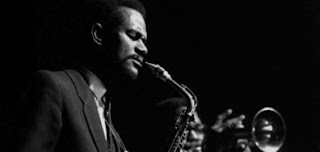 es Variations on Monk (written by Dizzy Reece) come briskly alive. And then we're into Harriott's joyous original Tonal (Mike Garrick does a classic big band version of this). The other side of the record also features one composition by Reece (the aforementioned Shepherd's Serenade) and one by Harriott (Pictures). And they're equally impressive. ¶ There's a cool perfection to the recording quality here which fits well with a certain austere sharpness in Joe Harriott's great music. I'm blown away. ¶ Darrel Sheinman at Gearbox and Jeremy Cooper at Soundtrap, who did the valve remastering (yes, valve re-mastering! Get thee behind me, transistors) are those rarest of specimens. Men who actually know what they're doing. They'
 ve taken a forgotten performance by a neglected jazz great and given it new life in stunning sound. And so getting up early to go to a record shop called Sister Ray in Soho on a rainy Thursday morning in November proved to be exactly the right thing to do. ¶ What do you know? For once being a jazz lover and a hi-fi nut has actually paid off.
 My irreplaceable brother James has come out of hospital alive and well, thank all the gods. I still have a nagging guilty feeling that his heart might have stopped because I was listening to a Ray Conniff album, but I'm getting over that. ¶ Anyway I celebrated James' magnificent recovery by using his credit card to buy myself a double vinyl copy of Sweden Heaven and Hell by Piero Umiliani. ¶ Yes, that's right. while my brother lay there, hovering between life and death, I was using his credit card to buy records. Okay, that's not true. I think he was already fully conscious and acing the cognitive response tests by that time. ¶ But anyway, I bought myself this record. When in fact, and I'll be brutally honest about this, I already had a copy. Why such madness? Why two copies of this album? Why? ¶ Friend, I rationalise it thus. I won't keep it for myself. I'll pass it along to a worthy recipient as soon as I find someone with exemplary musical taste who also has a working turntable (that's a thought... I should try and set up a vinyl system for James; it's a pity I let that Garrard 301 at the
 Oxfam shop slip through my fingers...). ¶ Anyway Sweden Heaven and Hell, a double vinyl reissue on Rocco Pandiani's unsurpassable Right Tempo label, may well be Umiliani's masterpiece. Certainly it features his best known compositions. Who is this Umiliani? Well, he is one of what I like to think of as the Other Italians. ¶ Everybody has heard of (or at least heard) Ennio Morricone. And those who take even a passing interest in Italian film music will also be familiar with Nino Rota (The Godfather), Riz Ortolani (who wrote the hit song More, from his score to Mondo Cane) and maybe Mario Nascimbene (The Vikings, One Million BC). ¶ But the Italian scene has even more to offer than that. In particular it has tho
 se three groovy geniuses I've grouped together as the Other Italians: Piero Piccioni, Armando Trovajoli (also known, for reasons no one has ever been able to adequately explain, as Aramando Trovaioli) and the man currently in question — Piero Umiliani. ¶ Sweden Heaven and Hell (or Svezia Inferno e Paradiso to give it its original title) is an example of Umiliani's prolific work as a film composer. The soundtrack to a 1968 sex movie about liberated Sweden, it's a crazy, groovy mix of jazz, sweetly abstract vocals, lounge music (decades before the term was even invented) and mod-ish electric guitar. ¶ It's most famous for Mah Na Mah Na, immortalised by both Benny Hill and the Muppets. Don't let the mention of fat sexist comedians or green frog puppets put you off, though. This is rapturous music and even setting aside Ma Nah Ma Nah (which I adore) there are plenty of other treasures here. ¶ Listening to the album again, I was struck by the variety and diversity of Umiliani's compositions. One track sounds like Eric Dolphy or some other free jazz stalwart of the 1960s scene (and sure enough it turns out to be called Free in Minore). ¶ Elsewhere on the album, Essere Donna suggests an Italian scat take on Peggy Lee's Fever and there are echoes
 of an electronic Ellington on Notte di Mezza Estate (Midsummer Night). The wonderfully named Sequenza Psichedelica (no need to translate that) sounds like a bunch of Gregorian monks and a gaggle of sexy female Italian session vocalists got together for a party where the bongo drums are in slow motion and the punch is spiked with acid. It's a kind of Hammer movie black magic melt down. Plus it grooves. ¶ The sound quality on this 1997 pressing is just stunning. Thank you Rocco. It also has great cover art by Sandro Simeoni (much more vibrant and polished than the early stuff in this link. A fellow record nut has posted some interesting comments on Simeoni here). ¶ Rather less beguiling is the cover art for Requiem per un Agente Segreto, another Umiliani film score which I recently discovered. As the title suggests it's from a spy movie of the sixties (1967, as it happens, the height of the Bond-fueled espionage craze). ¶ Like Svezia Inferno e Paradiso, this begins with a somewhat dismayingly strident (at least to our Americanised ears) vocal track by Lydia MacDonald. (Lydia recorded some great jazz vocal albums with Piero Piccioni.) ¶ Soon, though, the music settles into a jazzy, funky groove, with some spectacular Hammond work which seems to anticipate the Stranglers' chart hit Golden Brown by over a decade. Track 13, called Lounge Suite on the CD, features some
  neo Dixieland jazz which evokes Umiliani's Dixieland in Naples on RCA Italiana in 1955. Now, I'm a man who is ordinarily highly allergic to Dixieland jazz in all of its diabolical manifestations. But there's something ineffably hip, European and light of touch about Umiliani's take on it.¶ So, in addition to his soundtrack work, Umiliani was also a giant of Italian jazz and these two strands of his work come together decisively in Smog, the score for a 1961 Franco Rossi crime film. This is essential listening, not only for Umiliani's work on it but also the contributions of US jazz singer Helen Merrill and troubled trumpeter Chet Baker, both of whom spent considerable time in Italy (there are some details of Chet's Italian work here). The rich, dense, edgy big band jazz on offer here sometimes sounds like the work of Johnny Richards. A more pedantic man than me might be tempted to say it has the same kind of ethnic richness and organisational density. ¶ Anyway, an
 other Umiliani classic.¶ Interested in exploring some work by this little known great? Or at least, not put off by the torrent of pretentious drivel you've just read? Then I suggest you get some Umiliani and get listening.¶ But where should you start? Well, if you're merely asking as a music lover, I'd suggest simply downloading or buying some Umiliani releases on CD. Try Dusty Groove. If you're additionally an audiophile, I recommend hunting down some of the early Right Tempo issues on vinyl. The first edition Right Tempo pressings tend to sound stunningly good. (I can't vouch for the original US release on Ariel, since I've yet to get a copy and listen to it). ¶ Here is useful selection of mini reviews to introduce you to Umiliani's work. (It also features a link to Dusty Groove, which is always a good thing.. Although I must say I'm a little peeved at the way they've bungled my order this Sunday).¶ As a fantastic post script to this, I just got an email ou
 t of the blue from Rocco himself. Rocco of Right Tempo records, a label for demigods like you and I. ¶ Rocco and I first came into contact when I bought some LPs from him on eBay. (Piccioni's legendary Camille 2000; another great Simeoni cover) and despite me possibly being the most pernickety customer he ever had, we've struck up a friendship. Now he's invited me to write the liner notes for the latest Piero Umiliani release on Right Tempo. How cool is that. I can't believe it. What an honour.
 I have to admit it. There are times when I sense that my brother James would be a tad ashamed of me. You see, James has always had impeccable taste in music. He introduced me to great records that I still revere to this day by Steely Dan, James Taylor and the Rolling Stones (specifically Exiles on Mainstreet). ¶ He even alerted me to Miles Davis — in the shape of his copy of Bitches Brew with that great cover by Abdul Mati Klarwein — an LP cunningly calculated by Miles to spread his music beyond strictly jazz listeners, to rock and soul album buyers like my brother. (It was deliberately labelled not as jazz but as Directions in Music.) ¶ And just as important as pointing me in the direction of the good stuff, I was pointed away from the bad stuff; James would not conceal his loathing when Lawrence Welk came on the television or some lamentable easy listening pap wafted over the airwaves via a transistor radio. Right on, James. Sound judgements, I still say. You know what you can do with that doggie in the window, folks. ¶ But this is probably why I still felt a vestigial sense of, if not quite shame, then at least furtive guilt when, purely in a spirit of experimentation, I recently played a record by Ray Conniff. In my defence, I was egged on to do this by my big band book: "The Conniff sound constantly demonstrates considerable skill in both arranging and performance" (there is also a learned dissertation about how Conniff doubles fem
 ale voices with high pitched saxophones and reeds, and male voices with low pitched ones). ¶ And, in addition, I was encouraged by the fact that the Unknown Jazz Fan (see 19 September) was also, apparently, an Unknown Easy Listening Fan and had deposited a large tranche of mint Ray Conniff albums to be resold for a pittance in a local charity shop. ¶ Having spent a lifetime avoiding this kind of lame elevator music, I decided to be open minded and give it a whirl. (Plus, let's face it, how could I resist the cover of the Ray Conniff Hi-Fi Companion?) So I bought a selection and headed homewards. ¶ But when I put a record on the turntable and those white bread voices began their smarmy harmonies, I found myself glancing uneasily over my shoulder. I didn't want anybody catching me listening to this stuff! Good job James is living in a different time zone. Back into the sleeve the LP went, to be buried, along with the other easy listening titles, deep in a remote shelf of the record collection awaiting disposal. ¶ However, I've got to say the two Conniff albums I picked up where he is in collaboration with jazz trumpeter Billy Butterfield were actually pretty good and they're keepers. Closely related to Ray Conniff in my mind — and in the withering condemnation of our shared youth — is Doris Day. ¶ Not that James or any of our family would have had much notion of Doris Day as a singer. To us, growing up, she was just the actress in those turgidly bland and squeaky clean Hollywoo
 d rom coms with the likes of Rock Hudson (I always remember the Mad magazine cartoon by Sergio Aragones of people coming out of a Doris Day and Rock Hudson movie and puking in the street). ¶ But, here's the thing. Doris can sing. Check her out in Young Man with a Horn, a movie with some small but genuine jazz credentials, thanks to the presence of not only Doris Day but Hoagy Carmichael and, on the soundtrack, Harry James. (Incidentally, the title Young Man with a Horn provoked the wrath of the film censor in Britain and necessitated a title change to the ludicrous Young Man of Music). ¶ But Doris Day's jazz connections go back to the end of the big band era when she was a singer with Les Brown (a position in which she was succeeded by the terrific Lucy Ann Polk — see 6 September). Indeed the teenage Doris's mother insisted that she was driven home after gigs, and the man assigned to chauffeuring duties was none other than Si Zentner (see 19 September), then a trombonist with the band. Those big band days are the area of Doris Day's career which most interests me, and which is the most jazz related. ¶ Thanks to our friend the Unknown Jazz Fan I picked up a very odd little item called Rhapsody in Blue, an LP which featured 16 tracks from Day's stint with the Les Brown band. It's on an obscure German label called Big Band Era/Luzern. The sound quality is
  dodgy, because the originals they're working from were pretty knackered, but it was a start. ¶ Then, thanks to Alan at Jazz House I picked up a sealed copy of Les Brown and Doris Day 1944-1946 on the reliable Hindsight label. The sound quality on this is excellent and it features Day's attractively poised rendition of Sentimental Journey, but it only features five tracks in total of her singing. So the search continues. ¶ I just got word, by way of an early morning phone call from Canada, that James has been rushed into hospital and is in intensive care. I'll now be praying for a swift and total recovery. And hoping that my listening to Ray Conniff (or Doris Day) wasn't a contributing factor...
 hnny Mandel. Wow. Side one concludes with Cornering the Suspect which takes us back into Mannix territory. ¶ Side two is an assortment of themes from other Goldsmith film scores, plus one more straggler from Warning Shot, a cover version of Nat King Cole's 'Mona Lisa' which seems to waver between Kurt Weill and the Mariachi Brass in terms of its interpretation. ¶ Von Ryan's March (from Von Ryan's Express, a war movie scored by Goldsmith in 1965) is one of the highlights here. It begins in martial fashion, then takes an unexpected turn into the territory of Benny Golson's Killer Joe. ¶ A Patch of Blue is another standout, wistful and quite lovely. Once again it's slightly reminiscent of Johnny Mandel (see The Sailor Who Fell from Grace with the Sea). But its poignant, poised precision is pure Goldsmith. Incidentally, A Patch of Blue will be the focus of a future piece by me on Jerry Goldsmith and Jazz. ¶ The theme from The Prize is a smooth and smoochy slow number which appears to have Moon River in its sights. Then, just to remind us of Goldsmith's crime jazz and spy movie credentials, side two closes with his theme from The Man
 work, further strengthening the album's claim as a desirable jazz item. ¶ In any case, Warning Shot, previously dismissed by me, turns out to be a crucial document in Jerry Goldsmith's early work. And it's one of the few convincing examples of jazz in the Goldsmith canon. It inspired me to take down my previous Si Zentner discovery Big Band Hits, for further listening. Which in turn inspired me to go back to Warning Shot. ¶ The two albums have been feeding off each other, so to speak. Now just one question remains, do I file this gem under Goldsmith or Zentner? Ah, the joys of a record collection...


