skip to main |
skip to sidebar
 My irreplaceable brother James has come out of hospital alive and well, thank all the gods. I still have a nagging guilty feeling that his heart might have stopped because I was listening to a Ray Conniff album, but I'm getting over that. ¶ Anyway I celebrated James' magnificent recovery by using his credit card to buy myself a double vinyl copy of Sweden Heaven and Hell by Piero Umiliani. ¶ Yes, that's right. while my brother lay there, hovering between life and death, I was using his credit card to buy records. Okay, that's not true. I think he was already fully conscious and acing the cognitive response tests by that time. ¶ But anyway, I bought myself this record. When in fact, and I'll be brutally honest about this, I already had a copy. Why such madness? Why two copies of this album? Why? ¶ Friend, I rationalise it thus. I won't keep it for myself. I'll pass it along to a worthy recipient as soon as I find someone with exemplary musical taste who also has a working turntable (that's a thought... I should try and set up a vinyl system for James; it's a pity I let that Garrard 301 at the
 Oxfam shop slip through my fingers...). ¶ Anyway Sweden Heaven and Hell, a double vinyl reissue on Rocco Pandiani's unsurpassable Right Tempo label, may well be Umiliani's masterpiece. Certainly it features his best known compositions. Who is this Umiliani? Well, he is one of what I like to think of as the Other Italians. ¶ Everybody has heard of (or at least heard) Ennio Morricone. And those who take even a passing interest in Italian film music will also be familiar with Nino Rota (The Godfather), Riz Ortolani (who wrote the hit song More, from his score to Mondo Cane) and maybe Mario Nascimbene (The Vikings, One Million BC). ¶ But the Italian scene has even more to offer than that. In particular it has tho
 se three groovy geniuses I've grouped together as the Other Italians: Piero Piccioni, Armando Trovajoli (also known, for reasons no one has ever been able to adequately explain, as Aramando Trovaioli) and the man currently in question — Piero Umiliani. ¶ Sweden Heaven and Hell (or Svezia Inferno e Paradiso to give it its original title) is an example of Umiliani's prolific work as a film composer. The soundtrack to a 1968 sex movie about liberated Sweden, it's a crazy, groovy mix of jazz, sweetly abstract vocals, lounge music (decades before the term was even invented) and mod-ish electric guitar. ¶ It's most famous for Mah Na Mah Na, immortalised by both Benny Hill and the Muppets. Don't let the mention of fat sexist comedians or green frog puppets put you off, though. This is rapturous music and even setting aside Ma Nah Ma Nah (which I adore) there are plenty of other treasures here. ¶ Listening to the album again, I was struck by the variety and diversity of Umiliani's compositions. One track sounds like Eric Dolphy or some other free jazz stalwart of the 1960s scene (and sure enough it turns out to be called Free in Minore). ¶ Elsewhere on the album, Essere Donna suggests an Italian scat take on Peggy Lee's Fever and there are echoes
 of an electronic Ellington on Notte di Mezza Estate (Midsummer Night). The wonderfully named Sequenza Psichedelica (no need to translate that) sounds like a bunch of Gregorian monks and a gaggle of sexy female Italian session vocalists got together for a party where the bongo drums are in slow motion and the punch is spiked with acid. It's a kind of Hammer movie black magic melt down. Plus it grooves. ¶ The sound quality on this 1997 pressing is just stunning. Thank you Rocco. It also has great cover art by Sandro Simeoni (much more vibrant and polished than the early stuff in this link. A fellow record nut has posted some interesting comments on Simeoni here). ¶ Rather less beguiling is the cover art for Requiem per un Agente Segreto, another Umiliani film score which I recently discovered. As the title suggests it's from a spy movie of the sixties (1967, as it happens, the height of the Bond-fueled espionage craze). ¶ Like Svezia Inferno e Paradiso, this begins with a somewhat dismayingly strident (at least to our Americanised ears) vocal track by Lydia MacDonald. (Lydia recorded some great jazz vocal albums with Piero Piccioni.) ¶ Soon, though, the music settles into a jazzy, funky groove, with some spectacular Hammond work which seems to anticipate the Stranglers' chart hit Golden Brown by over a decade. Track 13, called Lounge Suite on the CD, features some
  neo Dixieland jazz which evokes Umiliani's Dixieland in Naples on RCA Italiana in 1955. Now, I'm a man who is ordinarily highly allergic to Dixieland jazz in all of its diabolical manifestations. But there's something ineffably hip, European and light of touch about Umiliani's take on it.¶ So, in addition to his soundtrack work, Umiliani was also a giant of Italian jazz and these two strands of his work come together decisively in Smog, the score for a 1961 Franco Rossi crime film. This is essential listening, not only for Umiliani's work on it but also the contributions of US jazz singer Helen Merrill and troubled trumpeter Chet Baker, both of whom spent considerable time in Italy (there are some details of Chet's Italian work here). The rich, dense, edgy big band jazz on offer here sometimes sounds like the work of Johnny Richards. A more pedantic man than me might be tempted to say it has the same kind of ethnic richness and organisational density. ¶ Anyway, an
 other Umiliani classic.¶ Interested in exploring some work by this little known great? Or at least, not put off by the torrent of pretentious drivel you've just read? Then I suggest you get some Umiliani and get listening.¶ But where should you start? Well, if you're merely asking as a music lover, I'd suggest simply downloading or buying some Umiliani releases on CD. Try Dusty Groove. If you're additionally an audiophile, I recommend hunting down some of the early Right Tempo issues on vinyl. The first edition Right Tempo pressings tend to sound stunningly good. (I can't vouch for the original US release on Ariel, since I've yet to get a copy and listen to it). ¶ Here is useful selection of mini reviews to introduce you to Umiliani's work. (It also features a link to Dusty Groove, which is always a good thing.. Although I must say I'm a little peeved at the way they've bungled my order this Sunday).¶ As a fantastic post script to this, I just got an email ou
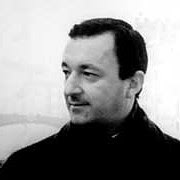 t of the blue from Rocco himself. Rocco of Right Tempo records, a label for demigods like you and I. ¶ Rocco and I first came into contact when I bought some LPs from him on eBay. (Piccioni's legendary Camille 2000; another great Simeoni cover) and despite me possibly being the most pernickety customer he ever had, we've struck up a friendship. Now he's invited me to write the liner notes for the latest Piero Umiliani release on Right Tempo. How cool is that. I can't believe it. What an honour.
 I have to admit it. There are times when I sense that my brother James would be a tad ashamed of me. You see, James has always had impeccable taste in music. He introduced me to great records that I still revere to this day by Steely Dan, James Taylor and the Rolling Stones (specifically Exiles on Mainstreet). ¶ He even alerted me to Miles Davis — in the shape of his copy of Bitches Brew with that great cover by Abdul Mati Klarwein — an LP cunningly calculated by Miles to spread his music beyond strictly jazz listeners, to rock and soul album buyers like my brother. (It was deliberately labelled not as jazz but as Directions in Music.) ¶ And just as important as pointing me in the direction of the good stuff, I was pointed away from the bad stuff; James would not conceal his loathing when Lawrence Welk came on the television or some lamentable easy listening pap wafted over the airwaves via a transistor radio. Right on, James. Sound judgements, I still say. You know what you can do with that doggie in the window, folks. ¶ But this is probably why I still felt a vestigial sense of, if not quite shame, then at least furtive guilt when, purely in a spirit of experimentation, I recently played a record by Ray Conniff. In my defence, I was egged on to do this by my big band book: "The Conniff sound constantly demonstrates considerable skill in both arranging and performance" (there is also a learned dissertation about how Conniff doubles fem
 ale voices with high pitched saxophones and reeds, and male voices with low pitched ones). ¶ And, in addition, I was encouraged by the fact that the Unknown Jazz Fan (see 19 September) was also, apparently, an Unknown Easy Listening Fan and had deposited a large tranche of mint Ray Conniff albums to be resold for a pittance in a local charity shop. ¶ Having spent a lifetime avoiding this kind of lame elevator music, I decided to be open minded and give it a whirl. (Plus, let's face it, how could I resist the cover of the Ray Conniff Hi-Fi Companion?) So I bought a selection and headed homewards. ¶ But when I put a record on the turntable and those white bread voices began their smarmy harmonies, I found myself glancing uneasily over my shoulder. I didn't want anybody catching me listening to this stuff! Good job James is living in a different time zone. Back into the sleeve the LP went, to be buried, along with the other easy listening titles, deep in a remote shelf of the record collection awaiting disposal. ¶ However, I've got to say the two Conniff albums I picked up where he is in collaboration with jazz trumpeter Billy Butterfield were actually pretty good and they're keepers. Closely related to Ray Conniff in my mind — and in the withering condemnation of our shared youth — is Doris Day. ¶ Not that James or any of our family would have had much notion of Doris Day as a singer. To us, growing up, she was just the actress in those turgidly bland and squeaky clean Hollywoo
 d rom coms with the likes of Rock Hudson (I always remember the Mad magazine cartoon by Sergio Aragones of people coming out of a Doris Day and Rock Hudson movie and puking in the street). ¶ But, here's the thing. Doris can sing. Check her out in Young Man with a Horn, a movie with some small but genuine jazz credentials, thanks to the presence of not only Doris Day but Hoagy Carmichael and, on the soundtrack, Harry James. (Incidentally, the title Young Man with a Horn provoked the wrath of the film censor in Britain and necessitated a title change to the ludicrous Young Man of Music). ¶ But Doris Day's jazz connections go back to the end of the big band era when she was a singer with Les Brown (a position in which she was succeeded by the terrific Lucy Ann Polk — see 6 September). Indeed the teenage Doris's mother insisted that she was driven home after gigs, and the man assigned to chauffeuring duties was none other than Si Zentner (see 19 September), then a trombonist with the band. Those big band days are the area of Doris Day's career which most interests me, and which is the most jazz related. ¶ Thanks to our friend the Unknown Jazz Fan I picked up a very odd little item called Rhapsody in Blue, an LP which featured 16 tracks from Day's stint with the Les Brown band. It's on an obscure German label called Big Band Era/Luzern. The sound quality is
  dodgy, because the originals they're working from were pretty knackered, but it was a start. ¶ Then, thanks to Alan at Jazz House I picked up a sealed copy of Les Brown and Doris Day 1944-1946 on the reliable Hindsight label. The sound quality on this is excellent and it features Day's attractively poised rendition of Sentimental Journey, but it only features five tracks in total of her singing. So the search continues. ¶ I just got word, by way of an early morning phone call from Canada, that James has been rushed into hospital and is in intensive care. I'll now be praying for a swift and total recovery. And hoping that my listening to Ray Conniff (or Doris Day) wasn't a contributing factor...
 What's even better than finding a great LP in some shop? Discovering a great LP you didn't know you had, already lurking in your record collection. ¶ From time to time, as I merrily scour through boxes of second hand albums ("crate digging" as it's known to today's hipsters), or sleuth the internet, I pause to think that I should be devoting a little more time to listening to the phenomenal selection I already have. ¶ It's like my dad used to say when I was buying books. "Why don't you read the ones you've already got?" Well, the answer is, I did, Dad. And I do. And I did — and do — listen to the records I already possess. I make great inroads into my jazz and soundtrack library almost every day. ¶ That's one of the sweet things about writing. You can work at home with the music playing. So on a good day I've got the valve amps glowing from dawn until dusk, and the turntable spinning. The first order of business is always to play my way through new acquisitions. (And, since the gods of vinyl have been smiling on me lately, there have been plenty of these — see my previous entry about the Unknown Jazz Fan.) ¶ But as much fun as it is assimilating new arrivals, it's rewarding in quite another way to take something
  down from the shelf and rediscover it. This just happened to me this afternoon when, after a hard day writing (it went very well, since you ask) I decided to unwind by browsing through a for-sale list of jazz vocal LPs — one of my favourite kinds of music. ¶ The LPs were on the website of my friend Alan Ross who runs the truly wonderful Jazz House Records here in the UK. I saw that Alan had a Peggy Lee album listed with an ace jazz pedigree including contributions by Bud Shank, Bob Cooper and Shorty Rogers. The album was a re-release on Jasmine, a dependably
  high quality British reissue label. But the title rang a bell (there was no picture of the record, or I would have recognised it instantly). I remembered finding a nice early British copy of a Peggy Lee LP a few years ago, with a title like that. ¶ I went to the shelf and sure enough there, between Yusef Lateef and Michelle Legrand, it nestled. An immaculate original Brunswick pressing in glorious mono, which was pretty much the only recording option back in June 1956 (some would say this was the high water mark of recorded sound; I'm willing to put it a few years later and allow that there are some virtues in early stereo). ¶ I'd listened to the
  album before and enjoyed it, but it's not a straight ahead jazz session and I'd never dreamed (no pun intended) that it featured sidemen like Bud Shank. Actually, according to a highly informative discography by Ivan Santiago, a Downbeat article in 1957 stated that the album "has the cream of West Coast jazzmen in [Lou] Levy, [Larry] Bunker, [Max] Bennett, Shorty Rogers, Buddy Clark, Bob Cooper and Bud Shank, to name but a few." Oh yes, and one Peggy Lee on vocals. By the way, the US (Decca) and British (Brunswick) releases had different covers, as shown here for your viewing pleasure. In my estimate the UK version has the edge, perhaps
  because it's an honest to gosh photo instead of a slightly goofy painting (based on a photo you can see here). The British cover's photo is taken from the back sleeve of Peggy's earlier album, Black Coffee. That's another classic LP, well worth your attention, even though the cover does feature a picture of a coffee cup (yes, really). Take your pick between the garishly kitsch 1956 (12 inch) release and the marginally more stylish monochrome version for the original ten inch LP in 1953. Any way you cut it, a waste of Ms Lee's visual charms, methinks.
 I keep an eager eye out for interesting LPs in the local charity shops (US readers should think thrift stores; it's the same principle). In this connection I'm reminded of a quote from El Maestro con Queso, a witty British internet wraith who writes about a dream he had of Hammond organs. "The B3... would be more useful for studio use. If your studio was under air attack." ¶ He adds, "Normally I only dream of scouring charity shop for records." Well, me too. The thing about charity shops is, from time to time, extraordinary things turn up in their vinyl bins. ¶ On one memorable occasion a mint copy of a bootleg of Quincy Jones's score for The Italian Job appeared; what the hell was that doing here in Putney High Street?
  Never mind, just scoop it up quick before it dissolves like a dream). Anyhow, the last few weeks have been a bonanza on this front. ¶ It all began in Putney at the British Heart Foundation shop with a clutch of albums by Jimmy Rowles, Duke Ellington and Miles Davis (Siesta, with Marcus Miller). It didn't stop there. I found that other shops in Putney had similar caches of quality jazz records.Gerry Mulligan (with Ben Webster), Zoot Sims, more Duke Ellington and more Jimmy Rowles (a pattern was emerging here). These were duly added to the bag. They were all in tip top condition and had obviously come from the collection of the same person. A discriminating and admirable individual. I began to think of this person as the Unknown Jazz Fan. ¶ Maybe the Unknown Jazz Fan has moved on to that big jazz club in the sky, leaving grieving family members to disperse an impressive collection of records to the local charity shops. Or on a more optimistic note, perhaps the UJF had converted the entire collection to digital recordings and was simply liquidating the now redundant vinyl as charitable donations. (Of course there are those who will think that death is preferable to
  converting analogue recordings to digital, in which case they should swap the opening clauses of the last two sentences.) ¶ In any case, I soon had a large stack of LPs supplanting the cat from the armchair (sorry Molly) and hours of listening pleasure ensued. It was great and I was a little wistful that I had found all of the UJF's LPs. Then an idea struck me. What if the Unknown Jazz Fan had gone further afield than Putney? ¶ I duly checked the charity shops in Wandsworth. Nothing. Then I went to East Sheen. Bingo. Fats Waller (a great 1960s RCA Camden pressing), Albert Ammons, Tommy Dorsey, and a splendid Si Zentner compilation (Big Band Hits) with some arrangements by Bill Holman. It seems that the UJF had a particular enthusiasm for the big bands. And also vocalists. As I trawled through the shops in Sheen I found a Tony Bennett with Ruby Braff, an Ella Fitzgerald with Nelson Riddle, a Hoagy Carmichael and a slew of Sinatra. ¶ Okay, so the UJF had gone through Putney and Sheen, spreading his treasures like Johnny Appleseed. I consulted my mental map. Where else should I try? Clapham Junction yielded just one Peggy Lee and another Hoagy Carmichael. But Richmond and
 Twickenham provided another mother lode. Artie Shaw and his Gramercy Five, another Peggy Lee and a Ted Heath Phase 4 album with Johnny Keating arrangements. Also my one-time co-worker and all around nice guy Courtney Pine's first album on Island (as with the Miles Davis Siesta, it seems the UJF does occasionally slip and listen to something modern). ¶ And thanks to my book on the big bands (see 2 August 2009) I picked up a compilation by the previously unknown Roy Fox, an expat American who was huge in Britain in the 1930s. It's charming and beguiling, with some delightful vocals by Mary Lee. ¶ There were also incredible early British Fontana pressings of a 1950s Sinatra album and, unbelievably a 50s Fontana Miles Ahead by Miles Davis. Unfortunately these last two were so badly scratched that there was no point in buying them. I regretfully left them there for the next jazz nut to find. The Unknown Jazz Fan's LPs were normally immaculate but occasionally a real dog would turn up and my guess is that these were already second hand when the UJF acquired them. Nonetheless, I couldn't believe my luck. ¶ Where else should I try? Hammersmith and Chiswick were earmarked for an early swoop on Saturday morning, yielding Woody Herman and a German pressing of Les Brown with Doris Day on vocals (a combination that I'd been actively looking for). ¶ After that minor triumph I almost left behind a double album by Dave Pell. This was a budget compilation on Pickwick (50 Hit Sounds of the Big Bands by th
 e Dave Pell Orchestra) and it had a majestically tacky cover. But then, so did that great Si Zentner... So I bought it, feeling like a bit of a chump. But as soon as it hit the turntable it just about took my head off. Consisting of Dave Pell's covers of classics by Ellington, Goodman, the Dorseys, et al, it was just beautiful and sweet and swinging. A wonderfully smooth, tight, together combo. I was already an admirer of Pell from his work with Lucy Ann Polk (see 6 September 2009), but my estimation of him moved up several notches. Another classic, salvaged from a charity shop, for a pittance... ¶ And the quest continued. On Wednesday I joined my sister for a pizza in Barnes on the occasion of her birthday. Was she touched by the promptness with which I turned up at the restaurant? Was there a tear in her eye at my enthusiasm? She evidently didn't notice the bag bulging with ten albums from the Barnes charity shop which I had turned up early to browse (yes, the UJF has been here, too!) featuring Count Basie, Benny Goodman, Duke Ellington and Woody Herman. The Woody Herman LPs not only featured Bill Holman arrangements but also had the great Balkan trumpeter Dusko Goykovich in the band — that's his picture at the top of this entry. (Dusko is pronounced Doo-skoe, by the way. Thank you for pointing that out, Guy Barker.) ¶ Now I sit here, wondering
  where next to travel in London to seek out the largesse of the Unknown Jazz Fan. Of course, I'm aware that he may not even exist. The findings could all be coincidental, the pattern just imaginary, something I'm imposing on random data, like the canals of Mars. Hmm yes. Fascinating theory. I think I might head up towards Chelsea next week. There are some promising charity shops there...
 Lucy Ann Polk, although virtually unknown today, was one of the greatest female jazz singers of the 20th Century (for my money, perhaps the greatest). Called “the hippest person alive,” she recorded a couple of sessions with Dave Pell in the early 1950s, for the Trend and Kapp labels (there is, or was, a video clip accompanied by two songs from these sessions here), and a few years later crafted the classic album Lucky Lucy Ann with Marty Paich on Mode (also released as Easy Livin’ on Interlude). ¶ The paucity — and scarcity — of these recordings goes a long way towards explaining why Lucy Ann is so criminally under rated, or even completely unknown. Other than one wonderful song for a Jerry Fielding album (the eerily evocative Chicken Road on Fielding’s Formula) and a handful of airshots recorded with Les Brown’s big band, these few precious sessions were the entirety of the currently available Lucy Ann Polk canon. Until now. ¶ So delight and excitement were my entirely understandable response when I discovered that the Dutch record label BVHaast had announced a new release of Lucy Ann Polk material. A fat, beautiful package entitled Lucy Ann Polk with the Les Brown Orchestra (1950-1953) featuring a total of 29 tracks and coming in at a fraction under 75 minutes. ¶ I ordered a copy as soon as the CD was released. Unfortunately, and this is where that small caveat comes in, despite the title and all the information presented, Lucy Ann Polk only sings on a smidgen over half the tracks. Seventeen out of 29 to be precise. Yet there is nothing on this CD’s cover or packaging or, indeed on the record company’s website, to indicate that this is anything except purely a Lucy Ann Polk collection. ¶ If you read the booklet
  (which is otherwise informative, comprehensive and well illustrated) it does concede that only 17 of the tracks feature the singer — but, the only way to find out what these 17 tracks are is to listen to the CD and make notes! Or, in this case, read a blog by yours truly, because I’ve done it for you. ¶ Lucy Ann sings on tracks 2, 4, 6, 8, 10, 11, 12, 14, 16, 17, 18, 20, 21, 22, 24, 26, 28. (So as you can see, it’s not even every other track, or any such usefully intuitive patterning.) ¶ The tracks in question are: 2 Sometimes I’m Happy, 4 Waitin’ at the Station, 6 Where are You (a beautiful vocal performance which shows Lucy Ann’s yearning purity of tone), 8 You’re Different, 10 Crazy He Calls Me, 11 Them There Eyes, 12 What’s Happened to Joe? (a very soulful and easeful performance of this Bobby Troup song), 14 It’s Too Soon to Know, 16 Black Coffee, 17 Pretty Baby, 18 Squeeze Me, 20 Again, 21 Honeysuckle Rose, 22 September Song, 24 Rock Me to Sleep, 26 Back in Your Own Back Yard, 28 I’ve Got the World on a String. ¶ The people at BVHaast obviously know that Lucy Ann is the main selling point of this CD (she takes precedence in the album title and cover
  art) so it’s disingenuous of them to pretend the buyer doesn’t need to know on which tracks she sings (and also that she doesn’t sing at all on a dozen of them). ¶ So there are several clear and easy ways this CD issue could have been improved. The first and most obvious one would have been to make it entirely a collection of Lucy Ann Polk numbers. If there weren’t enough of these available to fill the disc to its (admittedly generous) length, then at least all the Lucy Ann tracks should have been grouped together at the beginning of the CD, allowing them to be easily played in a continuous session. The 12 instrumental Les Brown numbers could all have then followed, making up a generous slab of bonus tracks. ¶ Perhaps this was considered to be out of the question for reasons of presenting the tracks in strictly chronological sequence, a jazz-nut-purist point of view with which I have a little (just a little) sympathy. But there’s nothing to suggest this is the case in the (extensive) booklet notes, since there’s nothing about chronology and no information I could find about recording dates beyond the “1950-1953” title. ¶ Of course,
  the Les Brown Orchestra is a classic, classy big band and an exceptional outfit, well worth listening to. Among their moody and well crafted instrumentals on this album is a memorable version of Earl Hagen’s Harlem Nocturne. ¶ In the final analysis this remains a must-have album and a very welcome one,and BVHaast are to be congratulated on saving these tracks from obscurity. The sound quality is very good and the booklet and artwork are, apart from the reservations I mentioned, first rate. What's more, the CD is now on sale at a reduced price (about a third of what I paid for it, he said, not without chagrin) so I suggest you pony up and order a copy immediately. ¶ And since I seem to be in the position of helping BVHaast out here with the information missing from their release, I might as well point out that of the four songs without writing credits on the disc, and attributed to “unknown”, only two qualify as real mysteries. It’s Too Soon to Know is actually by Deborah Chessler and Again is by Dorcas Cochran and Lionel Newman. The remaining mystery tracks are Waitin’ at the Station and You’re Different. (Maybe someone reading this will be able to solve those mysteries and identify who wrote these songs.) ¶ If you want to find out more about Lucy Ann Polk and, believe me,
  you do, you should also look into her other recordings. There are a scattering of tracks on the Les Brown CDs available on Hindsight (there are cheap copies available from Amazon here) but I would only pursue these after buying the BVHaast collection and searching out the superb Pell and Paich sessions. ¶ Lucy Ann’s contributions to the two albums with Dave Pell were gathered together on a single terrific CD from Fresh Sound, complete with excellent, in-depth booklet notes. Unfortunately this disc is now out of print. Come on, Jordi, bring it back please. (Jordi Pujol is the unsung hero responsible for Fresh Sound, a magnificent Spanish reissue label.) A semi-bootleg of this disc, with terrible cover art, was floating around recently but I’d advise against it. ¶ If you're an MP3 fan (for me music is only real if on vinyl, or in a pinch, a CD) you're in luck, and you can download the album here. The only material from these sessions currently available (in a physical form) are the Trend tracks which were briefly available on a Japanese CD and are still around on a rather scarce Japanese vinyl reissue of the Trend ten inch LP. The good news is that Lucky Lucy Ann has been reissued on CD by VSOP and is available and inexpensive. It is a classic album of West Coast jazz vocals and you should snap it up. ¶ Oh, and check out the mighty Mark Murphy’s version of Chicken Road (written by Joe Greene and sung by Lucy Ann in 1958) on his 1973 Muse album Mark II.
 Kudos to BBC Radio and their replay system. Thanks to this wonderful online device I can listen to music, documentaries and even the occasional drama while I'm doing my daily yoga session (which used to involve catching a train or bus to the yoga centre but now, happily, merely involves unrolling a mat on the living room floor). As a result I'm listening to seven hours of radio a week, just while I'm practising yoga. ¶ One of my favourite programs, as I've mentioned elsewhere, is Russell Davies on popular song. I'm also growing increasingly fond of Clare Teal, who does big band shows on both Sunday and Monday nights. The great thing about both these broadcasters is that they give due credit to arrangers. In fact it was Russell Davies who introduced me to the work of Robert Farnon. ¶ According to Davies, Farnon is esteemed as being the greatest arranger of his time. A Canadian who relocated in Britain, he is regarded as the king of easy listening, so as you can
  imagine, I approached his work with a certain degree of trepidation. Luckily he has also recorded a fair amount of authentic jazz with some great musicians, so that gave me an obvious starting point. ¶ The first CD (yes, I had to resort to CDs) that I got hold of was the Grammy award winning Tangence with trombonist JJ Johnson. Farnon also did some memorable soundtracks including Horatio Hornblower (the beautiful theme to which first attracted JJ Johnson to his work) and Shalako, which is pictured above. I'm on the look out for both of these on vinyl, but in the meantime I've been happy exploring Farnon's jazz work. ¶ Then last week both Rus
 sell Davies and Clare Teal broadcast programs celebrating the 90th birthday of George Shearing. A blind British piano prodigy who relocated in America, Shearing has managed to acquire near legendary status in jazz while remaining virtually absent from my record collection (okay I do have Beauty and the Beat, with Peggy Lee and a few others). I was delighted to have the chance to learn a bit more about him and doubly delighted when Clare Teal played a track with Shearing playing piano against arrangements by Robert Farnon. ¶ The track was 'Surrey with a Fringe on Top' by Rogers and Hammerstein, an old favourite of mine thanks to jazz
  interpretations by the likes of Miles Davis and Blossom Dearie. The Farnon and Shearing version was dynamite and I was chuffed to find it came from a complete album by the two. The album How Beautiful is Night is only available on CD, from the somewhat cheesy Telarc label, but you can't have everything. And inexpensive copies were for sale on Amazon, as I discovered when I went scurrying to my computer. ¶ The CD arrived today and I'm now listening to it. I would recommend it highly. Shearing has a terrific touch and as you kight guess, the arrangements by Farnon are so subtle and smooth and appropriate that they're almo
 st not there, if you know what I mean. So I'm now rubbing my hands with glee and keeping my eyes peeled for more albums by both these guys. Because, of course, more albums is what I need in my life. ¶ Excuse me including the cheesy Telarc CD cover, but you might want to know what it looks like. Buy it if you see it.
 I listen to music constantly while I work, and my work is writing so I tend to get very abstracted. I become so absorbed in what I'm doing that I might surface after an hour of concentration and realise I have no idea what I'm currently listening
 to.
¶ Today I was in the process of writing a new opening chapter for my spy novel and I was so wrapped up in it that I'd quite forgotten what CD I hastily popped on to play in the background. I've learned to treasure these moments because they throw up unexpected insights. ¶ Instead of trying to remember what the CD was or, worst of all, looking at the cover, I approach things from first principles. Who does it sound like? Well this was evidently 1960s jazz and it sounded a little like Henry Mancini, although I was sure it wasn't him. It also sounded like some of Mancini's great Italian contemporaries, such as Piero Umiliani or Piero Piccioni. It didn't quite have the depth or big band complexity of any of these stalwarts, but it definitely had a European sound. And it was very very funky. ¶ Was it that German guy who did the Edgar Wallace soundtracks (Peter Thomas)? I was studiously trying to avoid recalling who it actually was while these useful insights poured out. But then, like a bubble bursting, I remembered. It was Christopher Komeda, actually Krzysztof Komeda, one of the true stars of Polish jazz. ¶ Komeda was the composer of most of Roman Polanki's film scores, up until Komeda's untimely death in late 1968, after completing the music to Rosemary's Baby. That's a great soundtrack and well worth tracking down, but the CD I'd been listening to was Volume 13 of the Complete Recordings of Krzysztof Komeda on Polonia (CD 159) which features jazz standards and the score for Polanski's Cul de Sac. ¶ Probably Komeda's greatest jazz album was Astigmatic, which is generally regarded as a classic of European jazz, or anybody's jazz. There is a first rate reissue on vinyl which is still available. Click on the cover for a link to it. There's some good photographs of Komeda working on Polanski's early films and some further information here.
 I mentioned Jim Flora in my first post. Well here are examples of LP cover art by two of the other most talented illustrators who contributed to the jazz record labels. In fact, between them Burt Goldblatt (Holiday in Sax) and David Stone Martin (The President) pretty much provided the foundations of jazz album cover design. ¶ Besides working for EmArcy (Mercury) as in this example, Goldblatt almost single handedly supervised the output of Bethlehem (including a great deal of fine photography) while Stone Martin served a similar function on Norman Granz's labels, including Norgran, Clef and Verve. ¶ To see some impressive examples of their work, visit the archive of album covers at the Birka Jazz archive where there are a collections of cover images by Goldblatt and Stone Martin.
 I had a burger with Ben Aaronovitch and Simon Clegg in Belsize Park on Thursday. I got there early and had time to nose around a charity shop, which I must confess is one of my favourite pastimes. I look for DVDs, books and LPs. Occasionally CDs (I will listen to digital music in a pinch). ¶ As usual there was a box of LPs sitting on the floor of the shop. It was full of the normal depressing junk (how many copies of the soundtrack of the Sound of Music can there be out there?) but then I spotted a collection of the solo piano music of George Gershwin. ¶ Normally this wouldn't have filled me with any great excitement either, but the pianist in question was Richard Rodney Bennett. I have a lot of respect for Bennett thanks to his soundtracks, such as Murder on the Orient Express and his work on the fringes of jazz, often with top notch singers. The liner notes for the Gershwin album (EMI EMD 5538) were by Max Harrison, another jazz stalwart. So I eagerly scooped this up. ¶ Then I found a tranche of big band records. These came from a period earlier than my usual area of
  interest. For me jazz pretty much begins with Duke Ellington. But there was a serious looking Fletcher Henderson collection here (VJM VLP 36) and also a record of McKinney's Cotton Pickers. ¶ Ordinarily that name would signal the kind of early-scratchy trad jazz-Dixieland kind of material I'd steer well clear of. But I've recently been reading a rather groovy book about big bands The Big Band Years by Crowther and Pinfold (what great names, another charity shop acquisition). Just the previous night I'd been reading in it about McKinney's Cotton Pickers and the excellence of Don Redman's arrangements for them. ¶ This LP was Volume 1 of a two volume set, and I grinned a savage grin of triumph when Volume 2 turned up in the box as well. They were nice French pressings too, on RCA, the Black and White series (81 and 87). And in immaculate condition. When the pristine vinyl slid from the inner sleeve the static electricity emanating from it caused the hairs on the back of my hands to stir. Great stuff. ¶ The ensuing burger was very nice, too, at the admirable GBK and it was good to see Simon and Ben. But this is a music blog, so to hell with that. I got home and put the records on my turntable and I've been listening to them at intervals ever since. A bit squeaky and old timey compared to my usual listening but they do indeed swing. With arrangements by Redman and Henderson and solos by Fats Waller and Louis Armstrong, how can you go wrong? ¶ Oh, and a rather saucy title for 1928 on one of the Cottonpicker's sides: Put It There (Shag Nasty). Can they possibly mean...
 neo Dixieland jazz which evokes Umiliani's Dixieland in Naples on RCA Italiana in 1955. Now, I'm a man who is ordinarily highly allergic to Dixieland jazz in all of its diabolical manifestations. But there's something ineffably hip, European and light of touch about Umiliani's take on it.¶ So, in addition to his soundtrack work, Umiliani was also a giant of Italian jazz and these two strands of his work come together decisively in Smog, the score for a 1961 Franco Rossi crime film. This is essential listening, not only for Umiliani's work on it but also the contributions of US jazz singer Helen Merrill and troubled trumpeter Chet Baker, both of whom spent considerable time in Italy (there are some details of Chet's Italian work here). The rich, dense, edgy big band jazz on offer here sometimes sounds like the work of Johnny Richards. A more pedantic man than me might be tempted to say it has the same kind of ethnic richness and organisational density. ¶ Anyway, an
 other Umiliani classic.¶ Interested in exploring some work by this little known great? Or at least, not put off by the torrent of pretentious drivel you've just read? Then I suggest you get some Umiliani and get listening.¶ But where should you start? Well, if you're merely asking as a music lover, I'd suggest simply downloading or buying some Umiliani releases on CD. Try Dusty Groove. If you're additionally an audiophile, I recommend hunting down some of the early Right Tempo issues on vinyl. The first edition Right Tempo pressings tend to sound stunningly good. (I can't vouch for the original US release on Ariel, since I've yet to get a copy and listen to it). ¶ Here is useful selection of mini reviews to introduce you to Umiliani's work. (It also features a link to Dusty Groove, which is always a good thing.. Although I must say I'm a little peeved at the way they've bungled my order this Sunday).¶ As a fantastic post script to this, I just got an email ou


